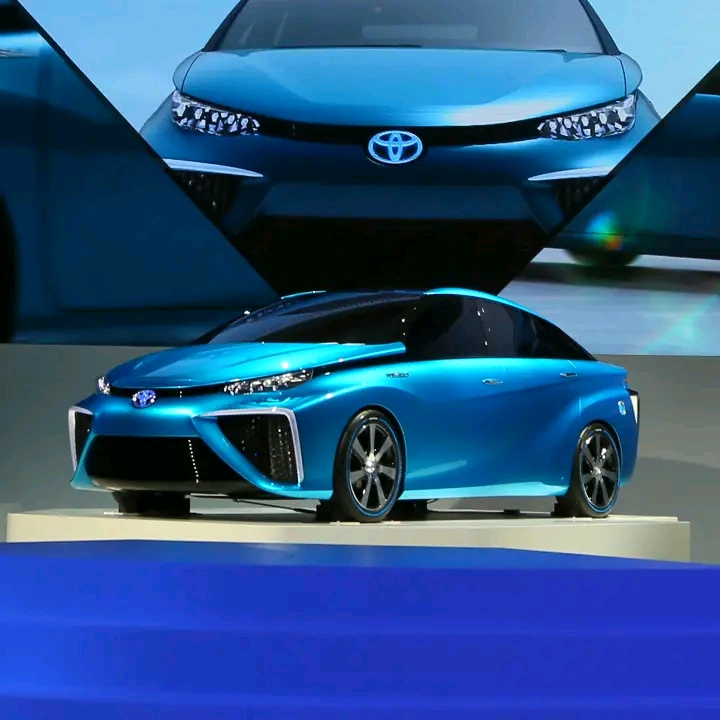
Toyota FCHV , a precursor to the Toyota Mirai, which is a hydrogen fuel cell vehicle.
Key Details of the Toyota FCHV/Mirai:
Technology:
It utilizes Toyota’s Fuel Cell System (TFCS), which combines fuel cell technology with hybrid technology, and includes proprietary Toyota-developed components like the FC stack, FC boost converter, and high-pressure hydrogen tanks.
Environmental Impact:
During operation, the vehicle emits no carbon dioxide or other atmospheric pollutants like nitrogen oxide, making it environmentally friendly.
Performance & Range:
The second-generation Mirai offers an EPA-estimated range of 402 miles on the XLE grade.
Refueling time is comparable to that of a gasoline car.
The FCHV-adv, an advanced version, can operate in temperatures as low as -30 degrees Celsius and achieved a range of approximately 830km on a single fueling with 70Mpa high-pressure hydrogen tanks.
Features:
The FCHV incorporates a high-performance Toyota FC Stack and benefits from hybrid technologies honed in vehicles like the Toyota Prius for efficiency and smooth driving.
It features a lighter body with aluminum components, optimized aerodynamics, and LED lighting for reduced power consumption.
An environmentally conscious air conditioner using CO2 as a coolant is also included.
Lifespan:
The fuel cell stacks in vehicles like the Mirai are designed to last approximately 150,000 to 200,000 miles.